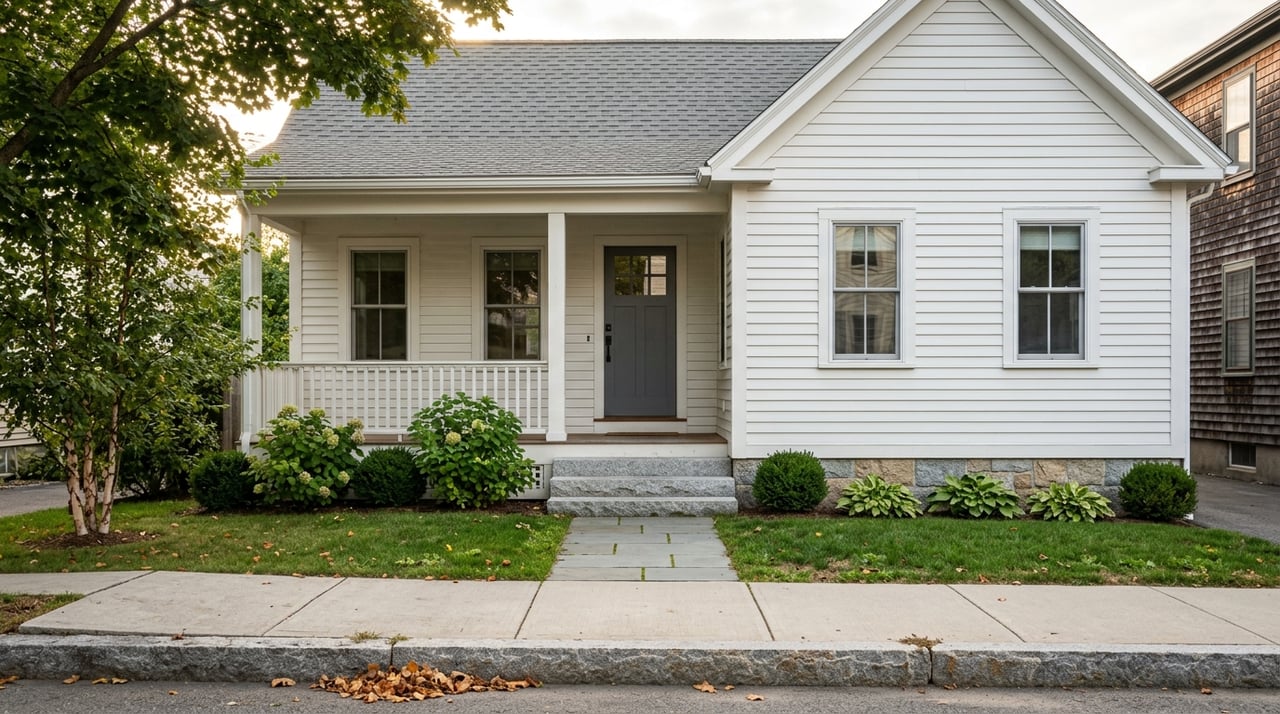
Hartford VT Neighborhoods Guide to Village and In-Town Living
June 18, 2026
June 18, 2026
Wondering whether Hartford, Vermont feels more like a downtown or a village town? The answer is a little of both, which is exactly what makes Hartford so appealing to many buyers. If you are trying to figure out where your daily life would feel most comfortable, this guide will help you compare Hartford’s in-town areas, village settings, and more rural pockets so you can narrow in on the right fit. Let’s dive in.
One of the most helpful ways to understand Hartford is to stop thinking of it as one uniform place. Hartford is officially shaped by five villages, and its history grew around rivers, mills, commerce, and homes built on nearby hillsides.
That pattern still matters today. Some parts of town feel compact and connected, while others feel quieter, more residential, or more rural. In simple terms, choosing Hartford often means choosing the kind of village life that best matches your routine.
In Hartford, “in-town” usually points most clearly to White River Junction. TRORC lists White River Junction as a downtown designation, which makes it the town’s strongest example of a compact, core-oriented setting.
If you picture being able to walk to coffee, dinner, arts venues, or everyday stops, this is the part of Hartford that most closely fits that vision. It also comes with a busier streetscape and more mixed-use surroundings than the other village areas.
White River Junction became Hartford’s primary cultural, political, and commercial center during its railroad-era growth. The historic district reflects that history through denser settlement and a mix of historic homes and commercial buildings.
Today, White River Junction is known as a walkable historic district with galleries, theaters, local shops, cafés, and arts anchors like Northern Stage and the Center for Cartoon Studies. It also keeps a strong transportation identity, with freight rail activity still present and Amtrak’s Vermonter serving White River Junction on its daily route.
For many buyers, White River Junction is the best fit if you want:
If that sounds energizing rather than overwhelming, White River Junction may be your best match in Hartford.
Village living in Hartford usually feels more compact than a rural property but calmer than a downtown block. You still get a sense of place, history, and connection, but often with less commercial activity in the middle of your day.
Hartford Village and Wilder are the clearest examples. Each offers a different version of village life, and that difference matters when you are thinking about noise, rhythm, housing style, and how you want your neighborhood to feel.
Hartford Village was the town’s economic and social center for much of Hartford’s history. Today, it still reads as a compact civic village rather than a downtown.
Along Maple Street, the historic district includes early houses, a church, a library, a grange, and commercial buildings clustered together in a way that feels rooted in village history. The area includes many surviving buildings now used as multi-family rentals, along with a substantial number of small historic single-family homes.
The architecture includes Federal, Gothic, Queen Anne, Colonial Revival, and related village-house styles. For buyers, that often translates into a setting with visual character and a quieter pace than White River Junction, while still feeling connected to Hartford’s main-road network and civic identity.
Hartford Village may be a strong fit if you want:
If you want charm and history without a full downtown atmosphere, Hartford Village deserves a close look.
Wilder offers another version of village living, with a character shaped by its history as a planned mill village on the Connecticut River side of town. Hartford’s history notes that it was one of the town’s first planned communities, built around the paper mill and worker housing.
The historic district describes a residential neighborhood with late-19th-century vernacular gable-front houses as common forms, along with larger homes on Hartford Avenue and Norwich Avenue. You also see modest worker housing and mill houses, which give Wilder a more neighborhood-scale feeling than White River Junction’s downtown core.
Wilder often appeals to buyers who want:
For many buyers, Wilder lands right in the middle. It feels village-like and connected, but generally less commercial and less visually downtown than White River Junction.
If your idea of home includes more land, more privacy, and a slower pace, West Hartford and Hartford’s outer pockets may feel like the right direction. This is where Hartford shifts away from village cores and toward a more car-first lifestyle.
West Hartford is described by the town as the most rural of Hartford’s five villages. It includes significant forest, farming, and open land, and it is crossed by the Appalachian Trail. It also still has a country store, a small library, and a town park along the White River.
West Hartford and outer Hartford areas may suit you if you want:
If you do not need to walk to shops or services every day, this style of living can offer a very different kind of Upper Valley experience.
In Hartford, lifestyle fit is not just about architecture or atmosphere. It is also about how you move through your day.
That is especially true because Hartford has stronger transit connections than many Upper Valley buyers expect. If commuting, regional travel, or a less car-dependent routine matters to you, this can shape where you feel most at home.
Advance Transit provides fare-free fixed-route service across Hartford and nearby Upper Valley communities. The network connects several of Hartford’s villages to everyday destinations across the region.
According to Dartmouth’s shuttle information, the Green route links Hartford Village, Wilder, and Norwich to Dartmouth via Route 5. The Orange route links White River Junction, the VA Hospital, and parts of Lebanon to campus via Routes 4 and 10, while the Yellow route links White River Junction, the Aquatic Center, and Dartmouth via Route 10.
Tri-Valley Transit also connects Orange and Windsor counties to Dartmouth using park-and-rides along I-89 and I-91 north of Hanover. For relocators and regional commuters, those connections can make Hartford easier to navigate than you might assume at first glance.
White River Junction stands out as Hartford’s strongest rail-and-highway hub. Amtrak’s Vermonter includes White River Junction among its Vermont stations, and the local downtown organization describes the village as being located at the crossroads of I-89 and I-91.
That combination matters if you travel often, commute across the region, or want more than one route in and out of town. For buyers who value flexibility, White River Junction offers the broadest transportation options in Hartford.
If you are deciding between in-town and village living in Hartford, this quick comparison can help:
| Area | Best Fit For | General Feel |
|---|---|---|
| White River Junction | Buyers who want walkability, arts, cafés, and bus or train access | Most downtown-like |
| Hartford Village | Buyers who want a compact historic core with a quieter civic feel | Traditional village |
| Wilder | Buyers who want a residential historic village with useful connections | Middle ground |
| West Hartford / outer pockets | Buyers who want more land, privacy, and a rural pace | Most country-like |
The best choice usually comes down to how you want your normal week to feel. Think beyond the house itself and picture your errands, commute, downtime, and weekend habits.
If you want to walk to cafés, performances, and local businesses, White River Junction likely belongs at the top of your list. If you want a traditional village setting with history and a quieter rhythm, Hartford Village may feel more natural.
If you want a residential historic area that splits the difference, Wilder is worth exploring. And if land, privacy, and open space matter most, West Hartford or Hartford’s outer pockets may be the better fit.
Because Hartford offers several very different living patterns within one town, it helps to explore each area with a local perspective. If you are comparing Hartford villages, relocating to the Upper Valley, or planning your next move, Lori Shipulski can help you find the part of Hartford that fits the life you want to live.
Stay up to date on the latest real estate trends.


Whether you’re ready to make a move or just starting to explore your options, I’m here to guide you every step of the way. Let’s chat about your goals, answer your questions, and create a clear path forward — no pressure, just honest support from someone who cares.
Get In Touch With Lori To Learn More
5 Allen St Ste 1 Hanover NH 03755